
The list of cities and countries that are banning shared scooters is steadily growing.
Montreal in Canada, Paris, Madrid, and the entire island of Malta have already preceded Brussels. Since January 1, the Czech capital Prague has also been added to that list. The debate about the place of shared scooters in the streetscape is therefore more heated than ever, especially now that problems surrounding safety, nuisance, and crime continue to persist in Brussels. According to independent mobility expert Kris Peeters, the conclusion is clear and not very promising for the sector. "They cost society more than they benefit it, and the profits go to foreign operators."
total ban
Peeters openly advocates a total ban on shared scooters and sees little reason to exclude Brussels from this. According toBruzz.be, he believes that the capital should also seriously consider taking this step. This position is at odds with the policy of recent years, which has focused primarily on adjustment and regulation. Several measures were introduced to limit the nuisance caused by shared and private scooters. Since 2024, parking shared scooters has only been permitted in special drop zones, a measure intended to put an end to scooters being carelessly left on sidewalks and intersections. In addition, the maximum speed was reduced to 20 kilometers per hour, while in pedestrian zones a limit of 8 kilometers per hour applies.
accident statistics
Despite these measures, problems continue to pile up. Accident figures are particularly worrying. During the first half of 2024, 234 accidents involving scooters were recorded in Brussels. In the same period in 2025, that number rose to 348. There was also one fatality. These figures represent an increase of no less than 44 percent. For Peeters, they show that the current approach is inadequate and that the risks are structural.
In addition to road safety, another, much more serious issue is also playing a role in the debate. Various policymakers and magistrates point to the role that shared scooters play in the ongoing wave of shootings that has been gripping Brussels for two years. Brussels public prosecutor Julien Moinil left no room for doubt on this matter. In a letter to the Conference of Mayors, he stated that scooters are used by both shooters and drug dealers. This observation prompted a swift political response.
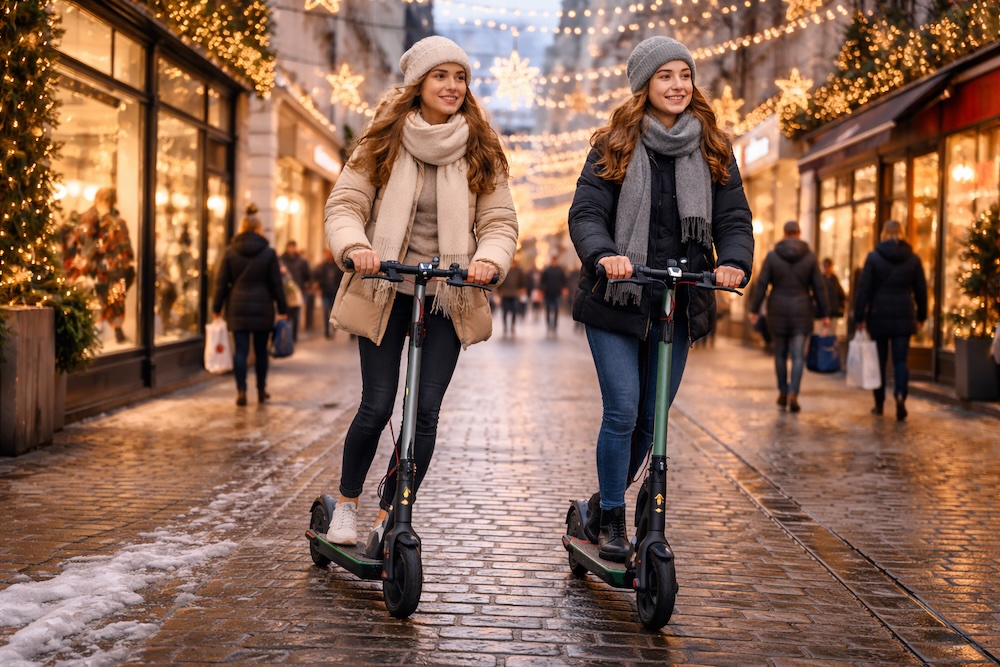
At the same time, Peeters warns against unintended consequences. "Steps are popular among certain population groups in certain neighborhoods of Brussels. We must be careful not to fall into measures that could be perceived as discrimination."
Since early December, users of shared scooters have been required to identify themselves by scanning their ID card or driver's license. Eventually, this information will be compared with a selfie that the user must take. In addition, it was decided to introduce a temporary ban on all scooters, both shared and private, on New Year's Eve. "This ban is drastic, but there are good reasons for it," says Peeters. "I support the measure, which seems sufficiently well-argued to me." According to him, the ban was announced well in advance and there are sufficient alternatives for getting around. "I'm thinking of bicycles, shared bicycles, or public transport, which runs all night, and finally taxis."
no profit
Peeters also points to studies showing that e-scooters are mainly used for journeys that used to be made on foot. From a health and sustainability perspective, he believes this offers no benefits. Nevertheless, he realizes that a total ban is politically sensitive. "Policymakers in Brussels have waited a long time to do something about the scooters, which means they have now become established."
If a total ban proves unfeasible, Peeters sees stricter regulation as an alternative. He advocates mandatory helmets and license plates on every scooter, so that users are more easily identifiable. The road safety institute Vias also supports mandatory helmets and the mandatory wearing of fluorescent vests during nighttime travel. According to Het Nieuwsblad, Federal Minister of Mobility Jean-Luc Crucke of Les Engagés is working on such a requirement.
discrimination
At the same time, Peeterswarnsagainst unintended consequences. "Scooters are popular among certain population groups in certain neighborhoods of Brussels. We must be careful not to fall into measures that could be perceived as discrimination." He refers to a 2019 study by Brussels Mobility, which shows that almost twice as many men as women use e-scooters and that 60 percent of users were younger than 35.
According to Peeters, consideration should therefore also be given to a different system of fines. "A fine does not have the same impact on everyone. In Finland and Switzerland, for example, the amount of a traffic fine is determined by the offender's income. This ensures that it has the same impact on everyone. A points-based driving license can also help in this regard. Finally, the government must also provide sufficient alternative modes of transport, especially in the most vulnerable neighborhoods."