


The Amsterdam Court of Appeal has rejected the claims of the FNV trade union in its long-running legal battle against Uber.
This brings a temporary end to a case that has had a major impact on the position of thousands of drivers in the Netherlands for years. The core of the conflict revolved around the question of whether Uber drivers should be considered employees or whether they work as independent contractors. On appeal, the court ruled that it is not possible to determine in general terms that all Uber drivers, or groups of drivers, are employees.
complex
Therulingfollows a complex legal process that originated in an earlier decision by the Amsterdam District Court. In 2021, that court ruled in favor of FNV, finding that Uber drivers fall within the scope of an employment contract. Uber disagreed and appealed the decision. During that appeal, the court of appeals decided in 2023 to refer preliminary questions to the Supreme Court. Those questions concerned the role of entrepreneurship in qualifying an employment relationship and how a judge should deal with proceedings relating to groups of workers rather than individual cases.
The Supreme Court then provided a guiding answer. In the earlier Deliveroo ruling, the highest court had already listed various circumstances that are important in assessing whether an employment contract exists. The Supreme Court now emphasized that there is no hierarchy among these circumstances and that entrepreneurship therefore does not weigh more heavily or lightly than other factors. In addition, it was made clear that it is possible for workers performing the same work to be classified differently in legal terms. According to the Supreme Court, a judge cannot therefore give a general ruling when the individual circumstances of workers vary too greatly. Only when certain groups are sufficiently comparable can a ruling be made.
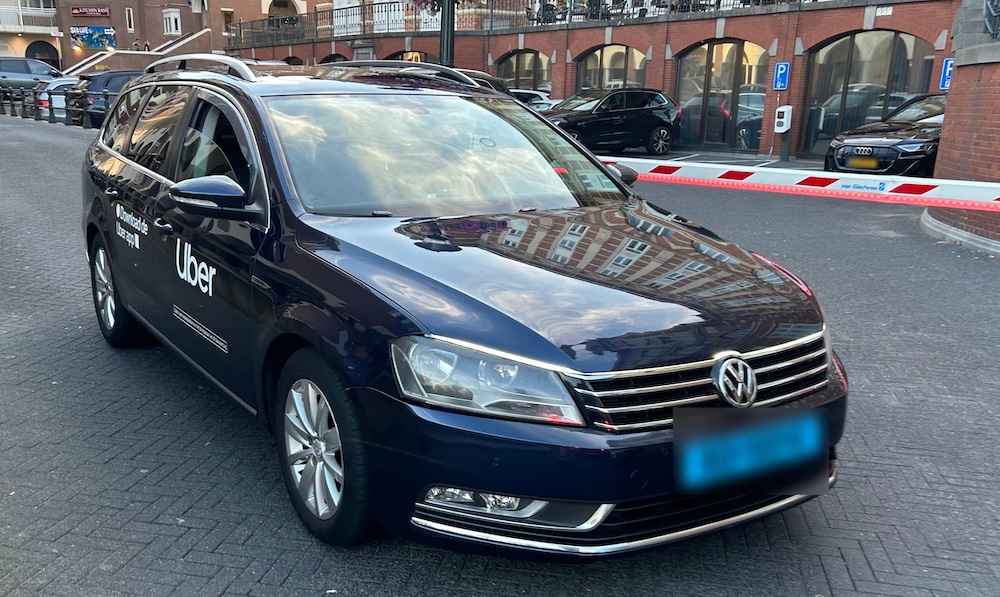
At the end of this legal battle, what remains is an image of a city full of moving cars, driven by people with diverse motives and interests.
With this explanation in hand, the Amsterdam Court of Appeal reached its decision. Six drivers joined Uber in the appeal proceedings. The court ruled that these drivers could not be classified as employees, but as independent contractors. A number of factors played an important role in this decision. For example, the court looked at the investments made by the drivers themselves, including the purchase and maintenance of their cars. The degree of freedom also weighed heavily in the decision. The drivers themselves determine when they work, which rides they accept, and which strategy they follow to optimize their income. In addition, they bear the risk themselves in terms of liability and incapacity for work.
room for nuance
The courtdid leaveroom for nuance. In its considerations, it explicitly stated that it is possible that individual Uber drivers do in fact work on the basis of an employment contract in practice. However, in these proceedings, the court was unable to establish that this is the case for specific drivers or clearly defined groups. Because FNV had focused on a general classification, the claims failed. As a result, the union's claims in this case were rejected in their entirety.
defeat
The ruling underscores how complex the discussion is about the employment relationship within platform companies such as Uber. While one driver may consciously choose entrepreneurship and the freedom that comes with it, the situation may be very different for another. With this decision, the court has made it clear that a tailored approach is necessary and that general rulings are not always possible. For FNV, this is a significant defeat, while Uber has been given some breathing space for the time being. At the same time, the door remains open for individual proceedings by drivers who believe that they should in fact be regarded as employees.

|
As a taxi service operator in Flanders, you are often required to send your trip data
to Chiron, the database of the Flemish Government.
Pitane Link is a complete booking and management system that seamlessly supports this
Chiron integration.
|